


adas calibration systems
Advanced Driver Assistance Systems (ADAS) are now fitted to most modern vehicles and play a critical role in road safety. Features such as lane departure warning, adaptive cruise control, autonomous emergency braking and blind spot monitoring rely on cameras, radar sensors and other electronic systems that must be precisely calibrated.
ADAS calibration ensures these safety systems function correctly after vehicle repairs, windscreen replacements, suspension work or wheel alignment adjustments.
GEMCO supplies professional ADAS calibration systems designed for workshops, body shops and vehicle repair centres. Our equipment enables technicians to accurately calibrate vehicle cameras, radar sensors and advanced driver assistance systems in accordance with manufacturer specifications.

OUR RANGE OF adas calibration systems
What is ADAS Calibration?
ADAS calibration is the process of adjusting and verifying the sensors used by Advanced Driver Assistance Systems to ensure they operate correctly.
Modern vehicles rely on a combination of cameras, radar sensors, lidar and ultrasonic sensors to monitor the road and assist the driver. These systems support features such as:
Lane keeping assist
Adaptive cruise control
Automatic emergency braking
Blind spot monitoring
Parking assist and 360° camera systems
If these sensors become misaligned, the vehicle’s safety systems may not function correctly. Calibration ensures that the sensors are accurately aligned with the vehicle’s geometry and the manufacturer’s specified tolerances.
Why ADAS Calibration is Required
Modern computerised alignment systems allow workshoADAS sensors are extremely sensitive and can lose calibration following routine repairs or maintenance.
Calibration may be required after:
Windscreen replacement
Suspension or steering repairs
Wheel alignment adjustments
Accident repairs
Replacement of cameras or radar sensors
Even small changes to vehicle geometry can affect sensor alignment, making accurate calibration essential for vehicle safety.
ADAS Calibration and Wheel Alignment
Many ADAS calibration procedures require the vehicle’s wheel alignment to be checked before calibration begins.
Incorrect wheel alignment can affect the positioning of sensors and cameras, which may result in inaccurate calibration results. For this reason, workshops often carry out a wheel alignment check before performing ADAS calibration.
Some ADAS calibration systems can integrate with wheel alignment machines, allowing technicians to complete both procedures efficiently within the same workshop setup.
However, standalone ADAS calibration systems are also available for workshops that do not operate a wheel alignment system.
ADAS Calibration Equipment
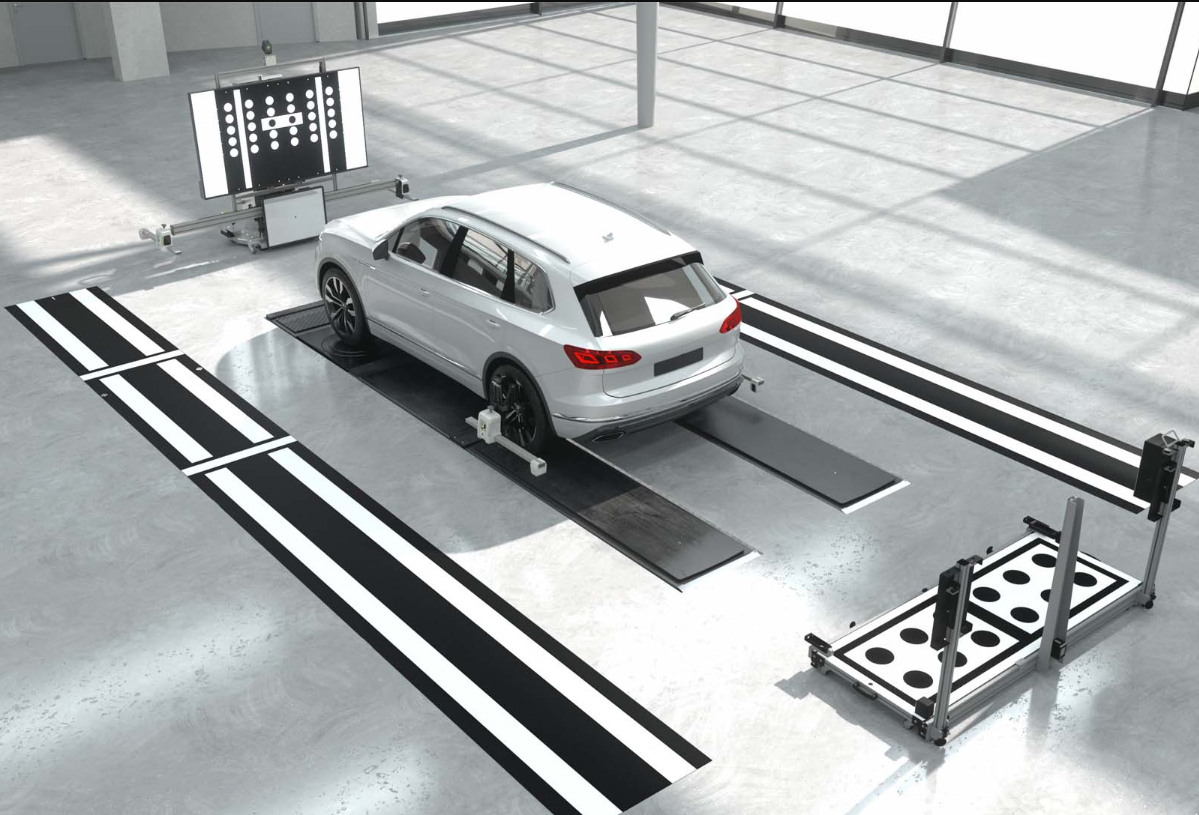
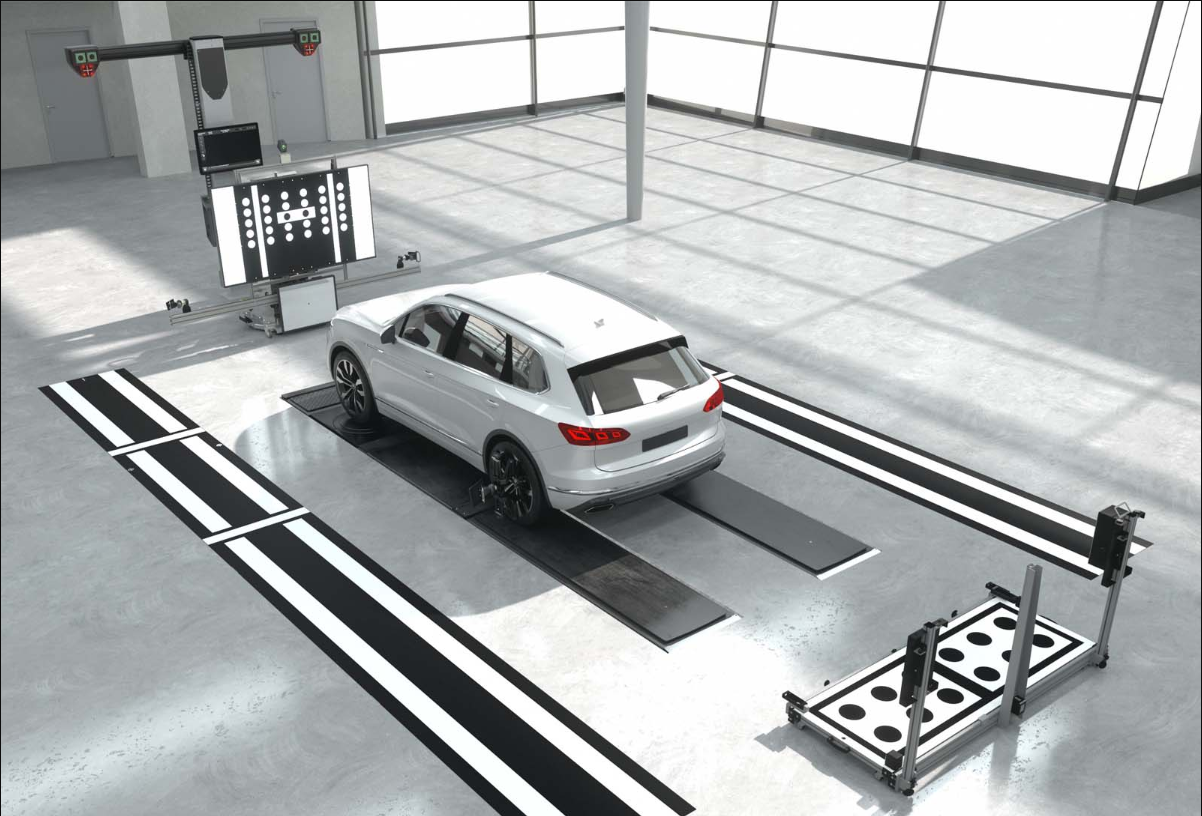
ADAS calibration systems use specialist equipment to position targets and reference panels in front of the vehicle so that sensors and cameras can be correctly calibrated.
Typical ADAS calibration equipment includes:
Camera calibration targets
Radar calibration reflectors
Laser positioning tools
Sensor alignment equipment
Diagnostic software
Systems such as the Mondolfo-Ferro PROADAS range allow technicians to position calibration targets accurately and perform calibration procedures in accordance with vehicle manufacturer specifications.
Some systems can also integrate with wheel alignment equipment to streamline workshop operations.

ADAS Calibration for Cameras, Radar and Sensors
Modern ADAS calibration equipment supports multiple types of vehicle sensors including:
-
Used for lane keeping assist and traffic sign recognition systems.
-
Required for adaptive cruise control and collision avoidance systems.
-
Ensures surround-view camera systems operate correctly.
-
Ensures sensors detect vehicles in adjacent lanes accurately.
Advanced systems allow workshops to calibrate a wide range of vehicle makes and models using manufacturer-specific targets and software.
ADAS Calibration and Future MOT Requirements
ADAS technology is becoming increasingly common on modern vehicles, and industry experts expect these systems to play a larger role in future vehicle inspections.
Currently, ADAS systems are not a dedicated part of the MOT test. However, if a malfunction causes a dashboard warning light to remain illuminated, the vehicle may fail its MOT.
As ADAS technology becomes standard on new vehicles, regulatory bodies such as the DVSA are exploring how these safety systems may be incorporated into future testing requirements.
Workshops equipped with ADAS calibration systems will be better prepared to support the growing number of vehicles fitted with advanced driver assistance technology.
Professional ADAS Calibration Systems for Workshops
GEMCO supplies professional ADAS calibration equipment designed for independent garages, body shops and vehicle repair centres.
Our ADAS systems allow technicians to calibrate vehicle cameras, radar sensors and advanced safety systems accurately and efficiently.
Whether you operate a specialist repair centre, accident repair facility or general workshop, ADAS calibration equipment enables you to service the latest vehicle technologies and maintain manufacturer-specified safety standards.
Static vs Dynamic ADAS Calibration
ADAS calibration procedures are typically performed using either static calibration or dynamic calibration, depending on the vehicle manufacturer and system requirements.
Static ADAS Calibration
Static calibration is performed with the vehicle stationary inside the workshop using specialist calibration equipment.
Technicians position calibration targets, panels or radar reflectors in front of the vehicle using precise measurement equipment. Diagnostic software is then used to calibrate the vehicle’s cameras and sensors to the correct position relative to the vehicle’s centreline.
Before calibration begins, technicians usually verify the vehicle thrust line and wheel alignment, ensuring the sensors are aligned accurately with the vehicle geometry.
Static calibration is commonly required after:
Windscreen replacement
Accident repairs
Suspension or steering work
Wheel alignment adjustments
Specialist ADAS calibration systems ensure the targets are positioned precisely according to manufacturer specifications.
Dynamic ADAS Calibration
Dynamic calibration is performed while the vehicle is driven on the road.
During this process the vehicle’s sensors and cameras calibrate themselves while the vehicle is moving, usually at a constant speed on straight roads. Diagnostic software monitors the calibration process until the system confirms that calibration is complete.
Some vehicles require both static and dynamic calibration procedures to ensure sensors operate correctly.

Frequently Asked Questions about ADAS calibration
-
ADAS calibration is the process of aligning and configuring the sensors used by Advanced Driver Assistance Systems so they function correctly and accurately detect road conditions.
-
ADAS calibration is commonly required after windscreen replacement, accident repairs, suspension work or wheel alignment adjustments.
-
Many calibration procedures require wheel alignment to be checked before ADAS calibration is performed to ensure sensors are positioned correctly relative to the vehicle.
-
ADAS calibration equipment typically includes calibration targets, radar reflectors, laser positioning tools and specialist diagnostic software.
-
Static ADAS calibration is performed with the vehicle stationary using specialist targets and calibration equipment. Dynamic calibration is carried out during a road test where the vehicle calibrates its sensors while driving.
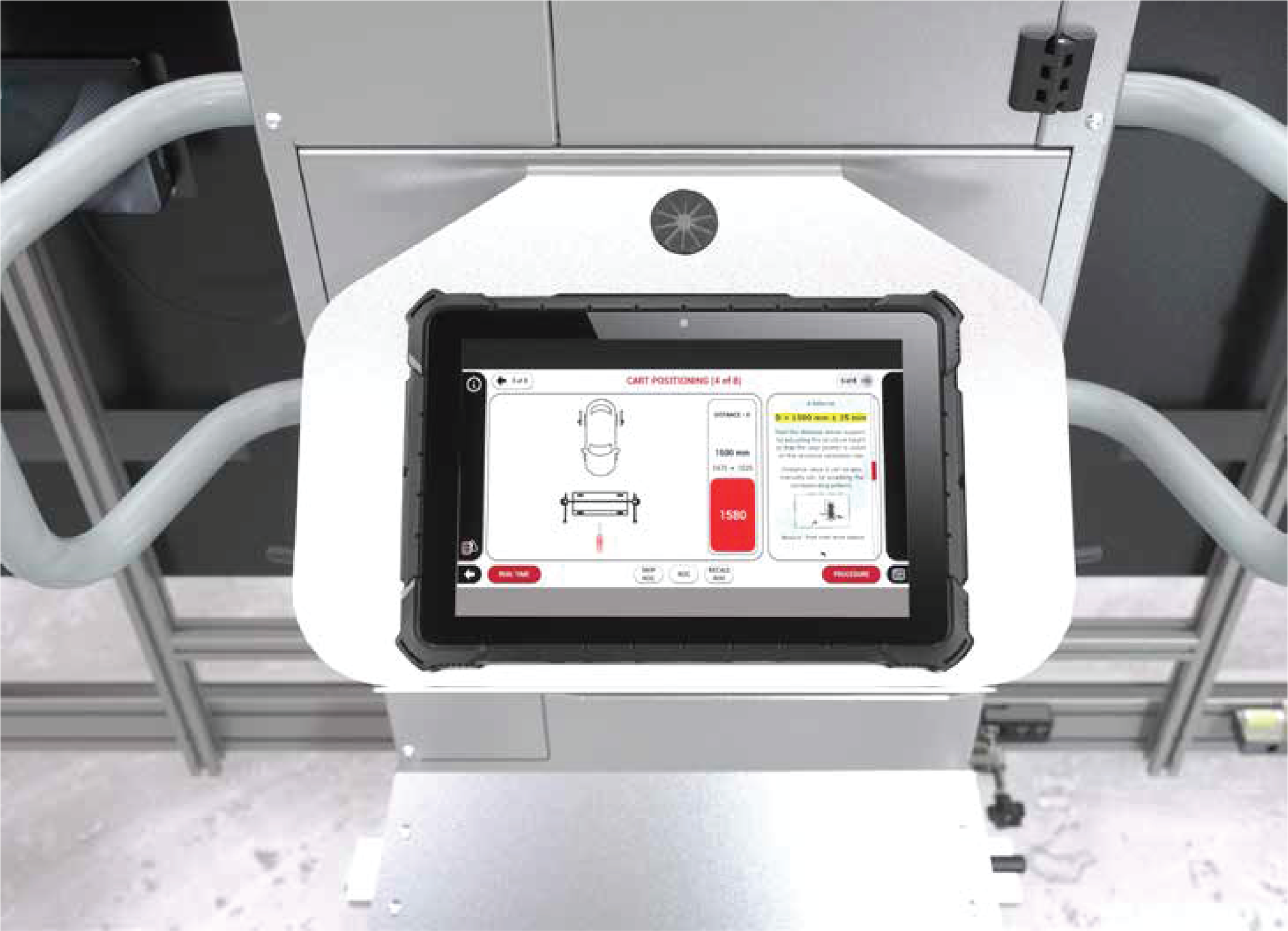
PROADAS START DIGITAL is equipped with BT laser pointers for optical vehicle alignment. The system is aligned by means of two pointers placed on the PROADAS system and two targets positioned on the clamps on the rear axle of the vehicle.
System positioning is controlled via software in real time through laser pointers that communicate the system position via Bluetooth.
Part Number: PROADAS-SD